
Plantar Fasciitis
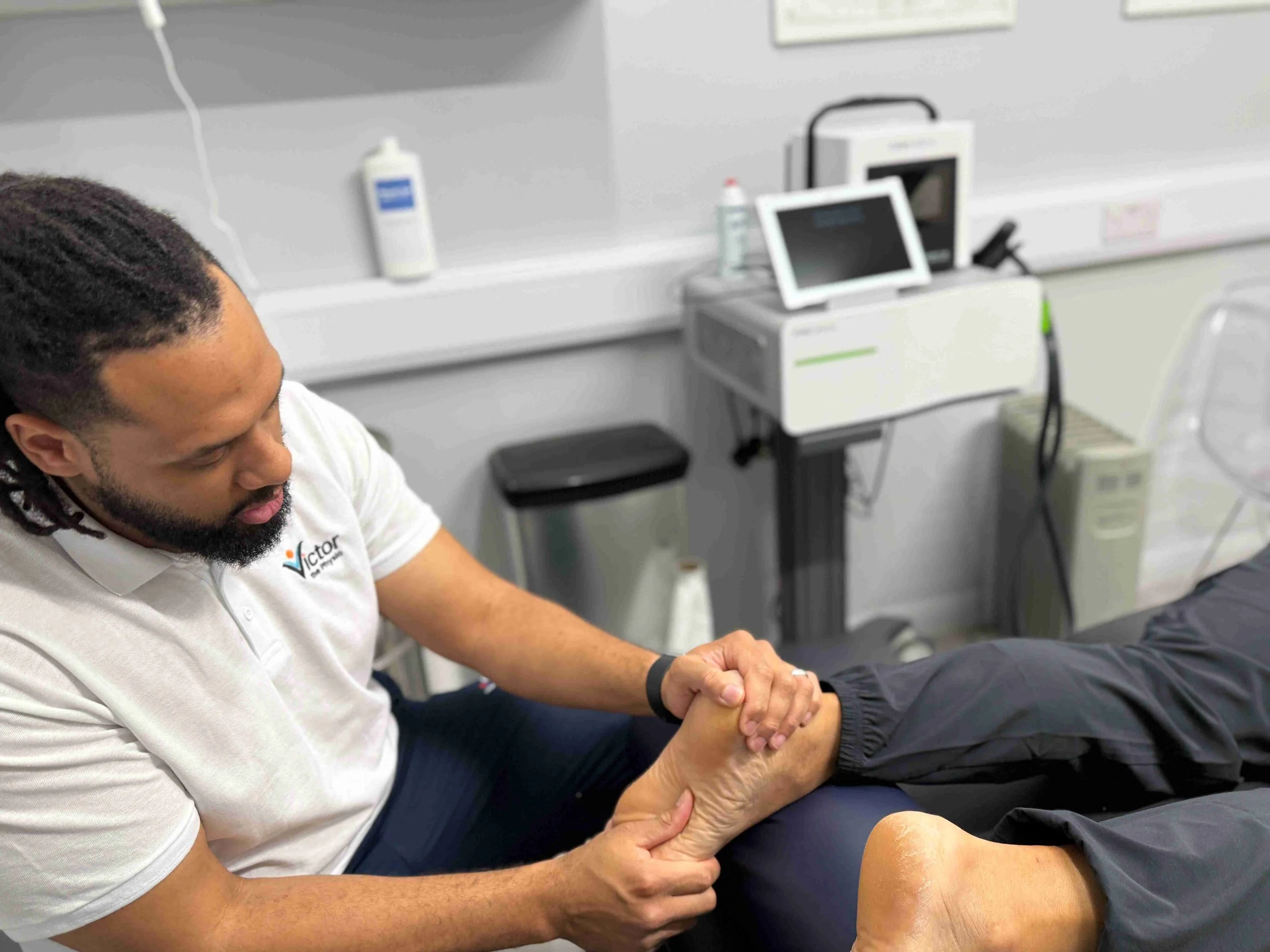
We pound the streets every day, carrying all our weight, so it's hardly surprising that 4–7% of the general UK population suffer from Plantar heel pain. It predominantly affects sedentary middle-aged and older adults, and is estimated to account for 8% of all running-related injuries. Plantar fasciitis can significantly impact your quality of life by causing sharp heel and arch pain, particularly with your first steps in the morning. Activities that involve prolonged standing, walking, or regular movements can also become challenging.
What are the common signs and symptoms?
Pain – this usually develops gradually at the centre and inner side of the heel, although it can occasionally spread over the whole foot
Stiffness
The pain is often sharp when you take your first steps out of bed in the morning. It eases as you begin to move around but then may return and worsen with long periods of activity like standing. One or both feet can be affected.
Why did i get Plantar fasciitis?
The plantar fascia is a thick, strong band of tissue which connects the heel bone to the base of the toes. It supports the arch of the foot, allowing us to walk, run or stand without difficulty. In plantar fasciitis, this important structure is damaged. Factors that may increase your risk of developing plantar fasciitis include:
Age – it most commonly affects people between the age of 40 to 60
Obesity – this puts extra pressure on your feet
Changes in footwear
Tight calf muscles
There is not always a clear cause.
How do you treat Plantar fasciitis?
Treatment can typically consist of a combination of:
Exercise rehabilitation: strength and mobility program
Training load adjustments
Focused and Radial Shockwave therapy
Soft tissue & joint mobilisation
Advice on Footwear changes, heel cushions and insoles to reduce stress on the fascia
How long does it take to recover?
The average duration of the condition is around 18 months, but some people can have it for much longer
How can shockwave therapy treat plantar fasciitis?
Radial and focused shockwave can both treat plantar fasciitis effectively. It is highly recommended the treatment is supported by exercise, activity management and stretches. Radial shockwave therapy is good for treating mildly chronic presentations and is good as it treating larger areas at a shallow depth. Focused shockwave is a more precise and powerful in its treatment. It is effective for both acute and stubborn, long term, issues. The benefits of combining the treatments include:
1) Pain relief
a. Subsequently improving mobility
2) Quick and easy to deliver
a. Only 3-6 sessions may be needed for a good result.
3) Long term, lasting effects
Are there any precautions I should take with this treatment?
Yes, before commencing your treatment, you should try and come off anti-inflammatory drugs (Ibuprofen, naproxen, diclofenac).
After each treatment, you should try and rest the foot for about 24 hours. It is best to avoid any impact sports (such as running) or long walks for 48 hours after each treatment.
You shouldn’t do any stretches for between 48 hours after the treatment. You are able to carry out general “day to day” activities, such as light walking.
What is Victor the Physio’s approach to treating Plantar fasciitis?
My approach to treating the condition is activity management, exercises and soft tissue work. If there has been a lack of improvement following six months of conservative management, I recommend a course of combined Focused and radial shockwave therapy.
