
Musculoskeletal care for Basingstoke
Specialist care for knee pain in Basingstoke
What is knee pain?
Knee pain is highly prevalent in the UK, affecting roughly 19% of adults over 16.
This can be problematic as the knee is essential for pretty much any form of movement such as walking, running, squatting and balancing. Impairment of the knee can significantly impair mobility, leading to a reduced quality of life.
There are a number of different causes for knee pain such as Baker cyst, Bursitis, Tendinopathy, Torn ligament, Meniscal tear, Arthritis, a patella fracture or dislocation.
Understanding the pathology at the knee will dictate the approach to the treatment. I believe in educating my clients in the pathology and treatment approach as it will empower them to remain complaint, reducing the risk of treatment failure.
How knee pain might show up
Pain and Swelling
stiffness
Limited range of movement
Difficulty bearing weight
Weakness
clicking
My approach
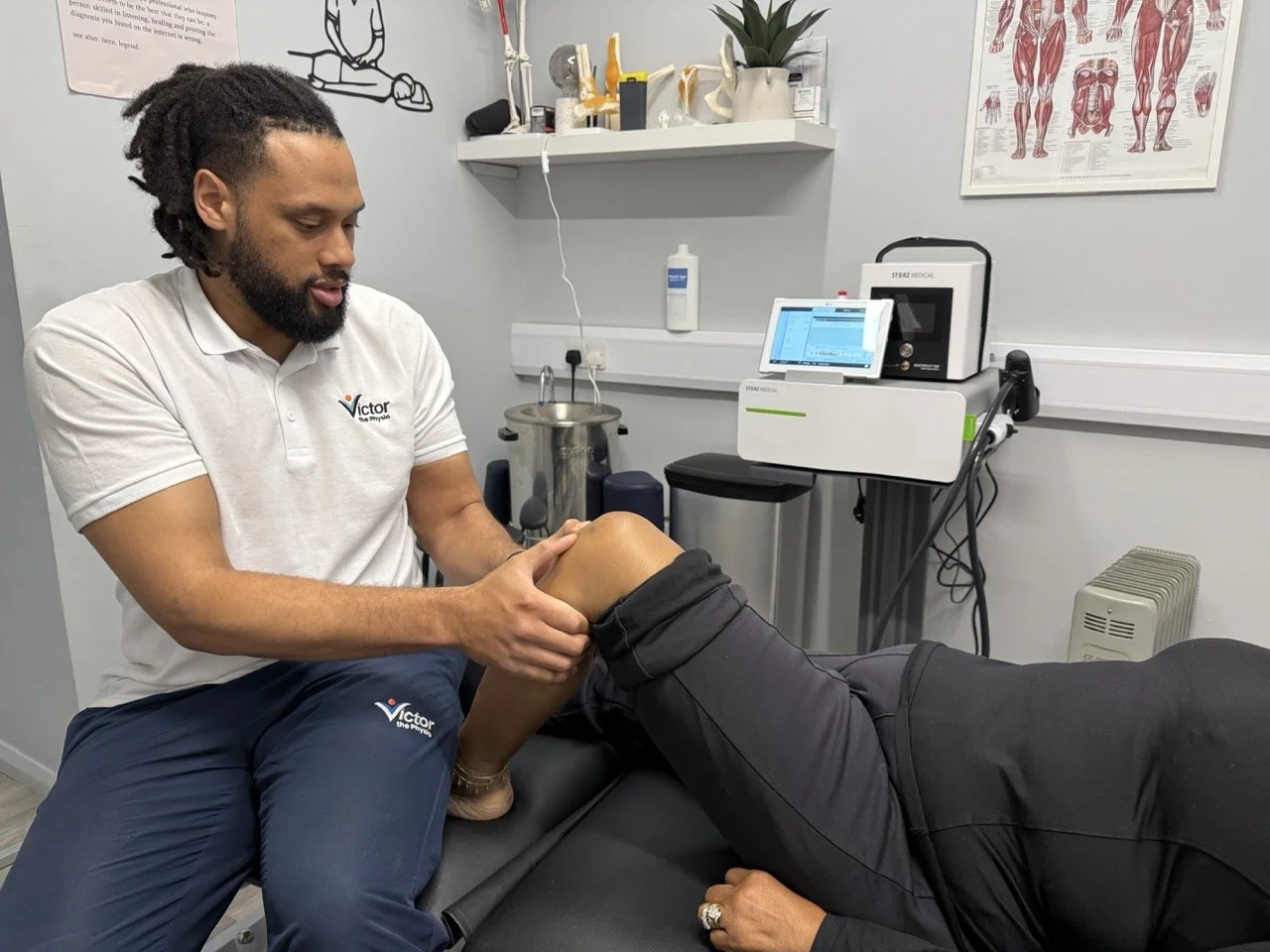
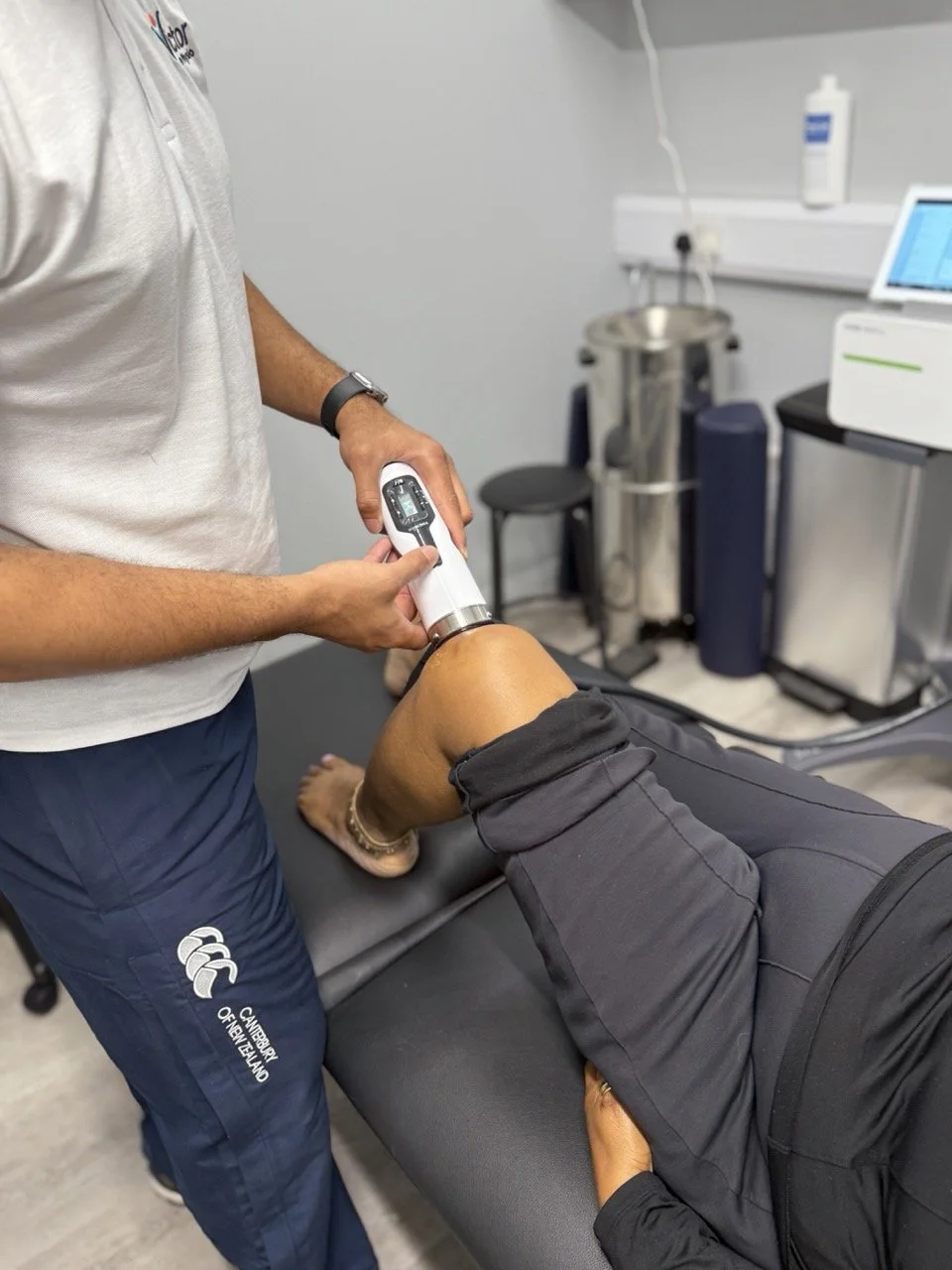
I approach Knee conditions with advice, education, hands on therapy, tailored exercise programs and shockwave therapy. This typically achieves a reduction in pain, improved mobility and strength, restoring functional mobility.
Services I offer to help with knee pain include:
-
![A male physiotherapist showing a diagram of the human body to a female patient in a consultation room with anatomy posters and a model of the human spine on the desk.]()
Physiotherapy
-
![A physiotherapist treats a patient's foot using a handheld shockwave therapy device in a consultation room with anatomy charts on the wall.]()
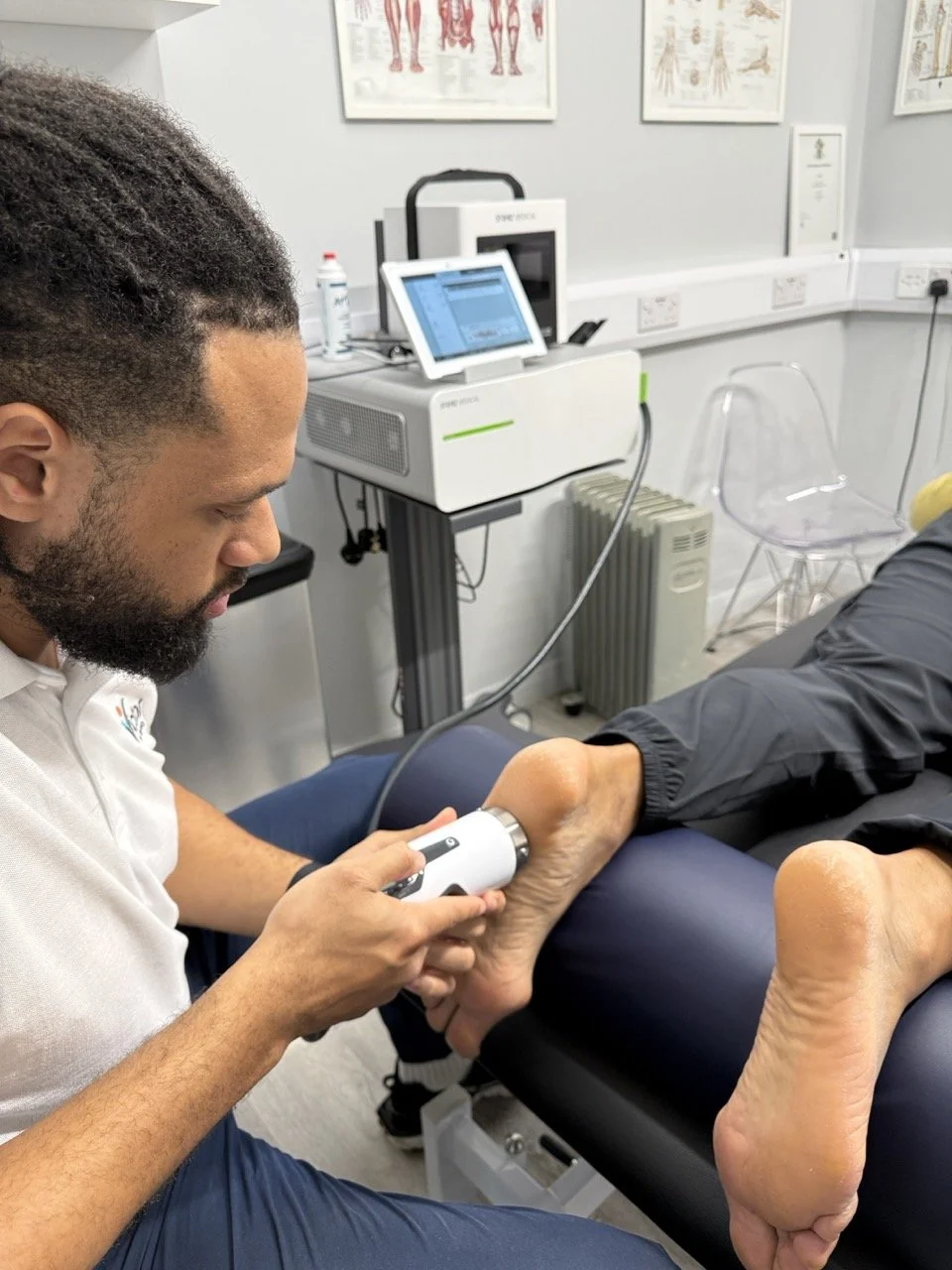
Shockwave Therapy
-
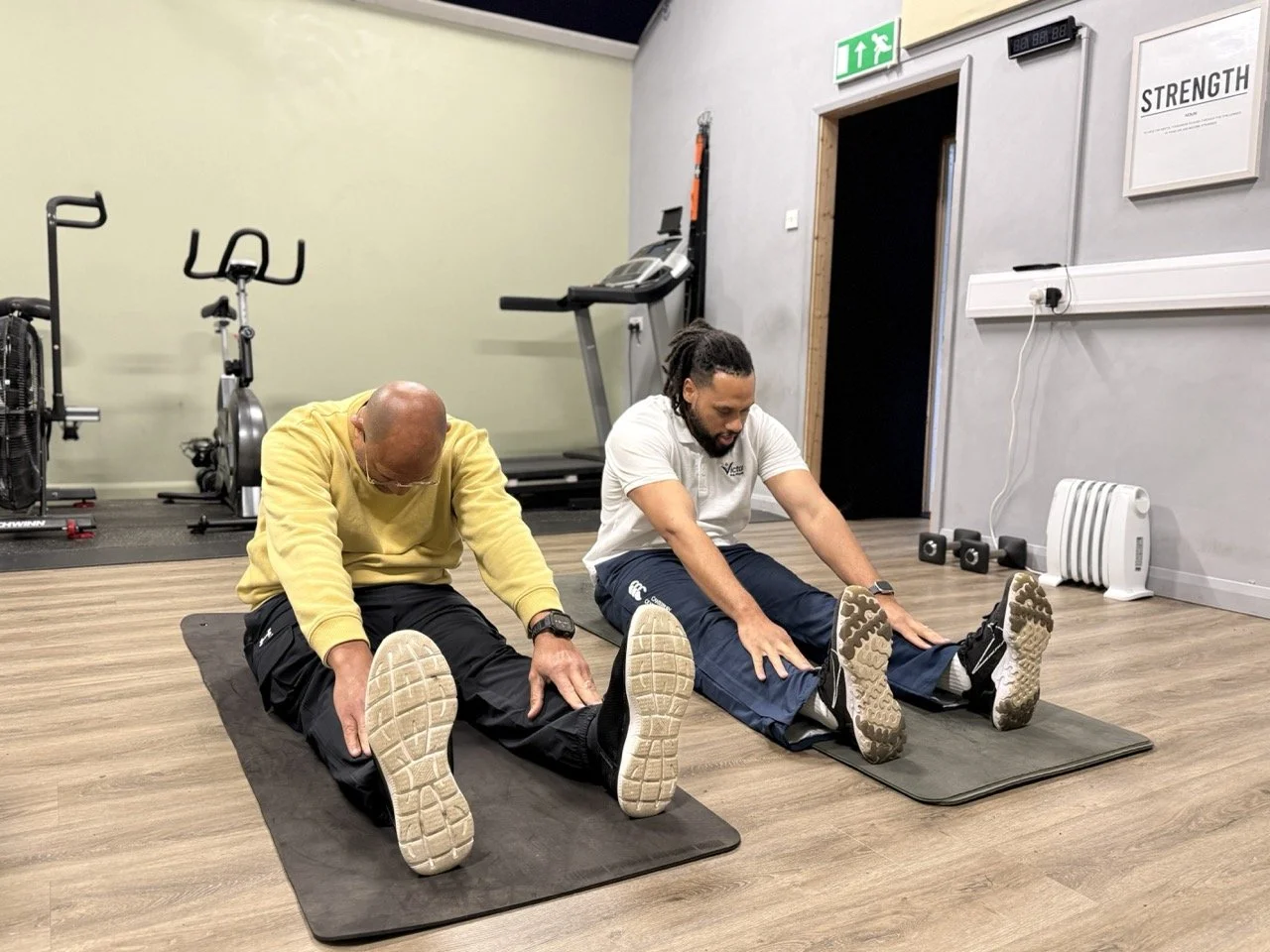
![Two men sitting on exercise mats stretching their legs in a gym, with fitness equipment including a treadmill, stationary bike, and dumbbells in the background.]()
1:1 Physio Led Pilates
-
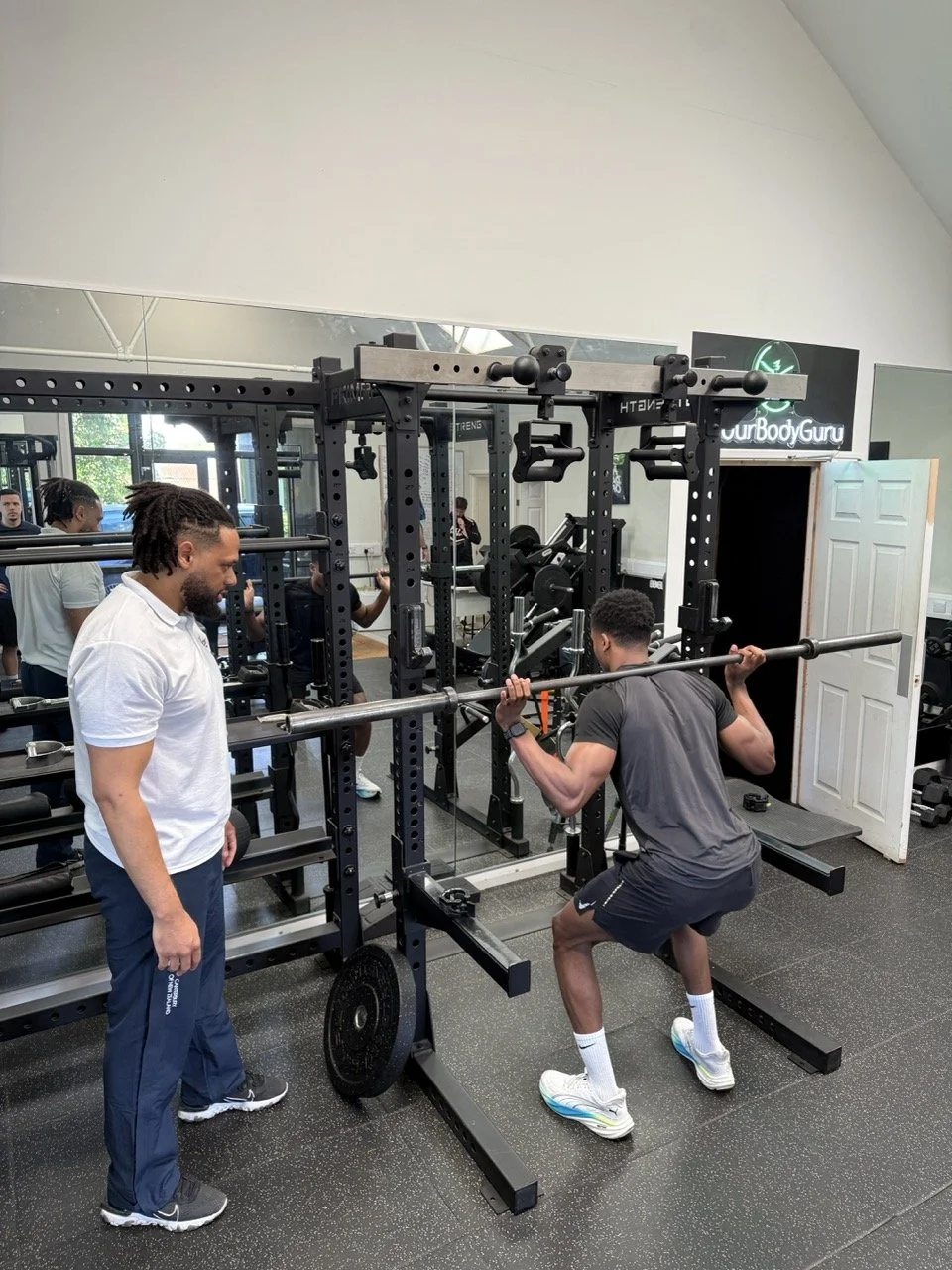
![Man working out with a barbell while a physiotherapist watches at a gym with weightlifting equipment and mirrors.]()
1:1 Strength and Conditioning
How does it work?
-
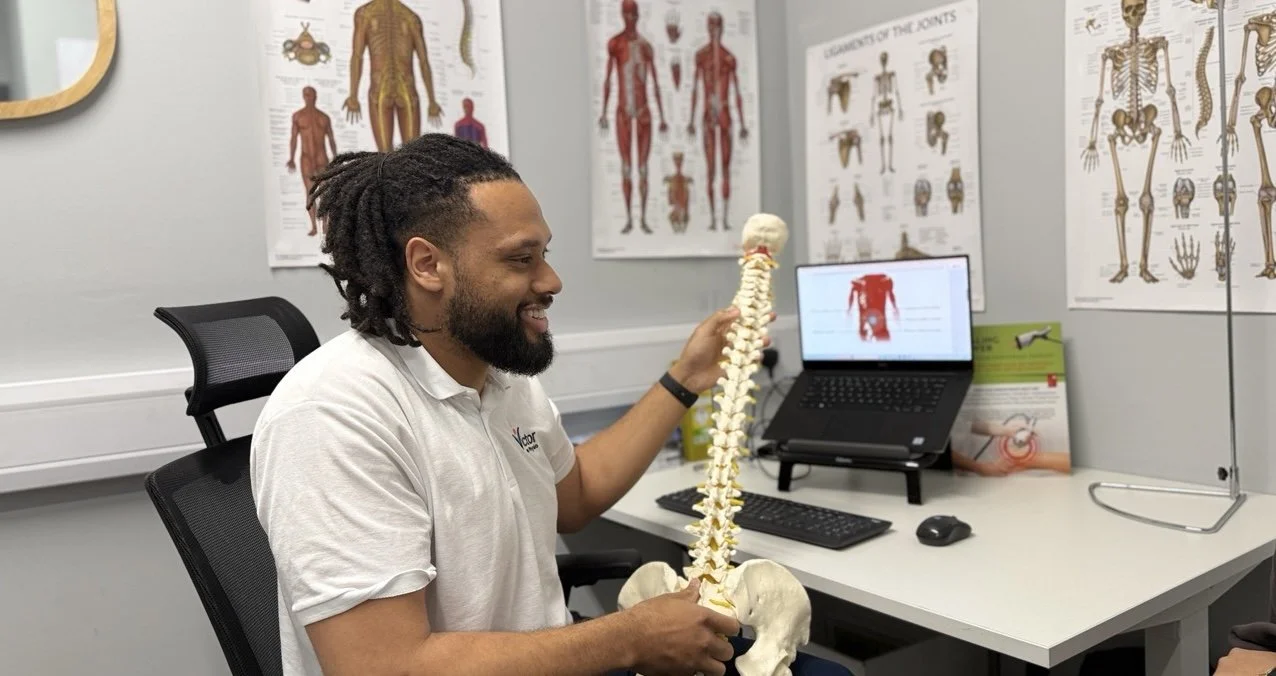
![A man with dreadlocks smiling and holding a skeletal model of the human spine in a medical office or classroom environment, with anatomical posters on the walls and a laptop on the desk.]()
Book initial consultation
Select a time that suits you via my online calendar here, and you’ll receive a confirmation and a brief intake form to help me prepare for our first session.
-
![A man in a white shirt and a woman in a dark hoodie are in a medical consultation room. The man is pointing to a diagram of the human shoulder on a laptop screen. There are anatomy posters on the walls and a model of the human spine and pelvis on the desk.]()
Attend Initial Consultation
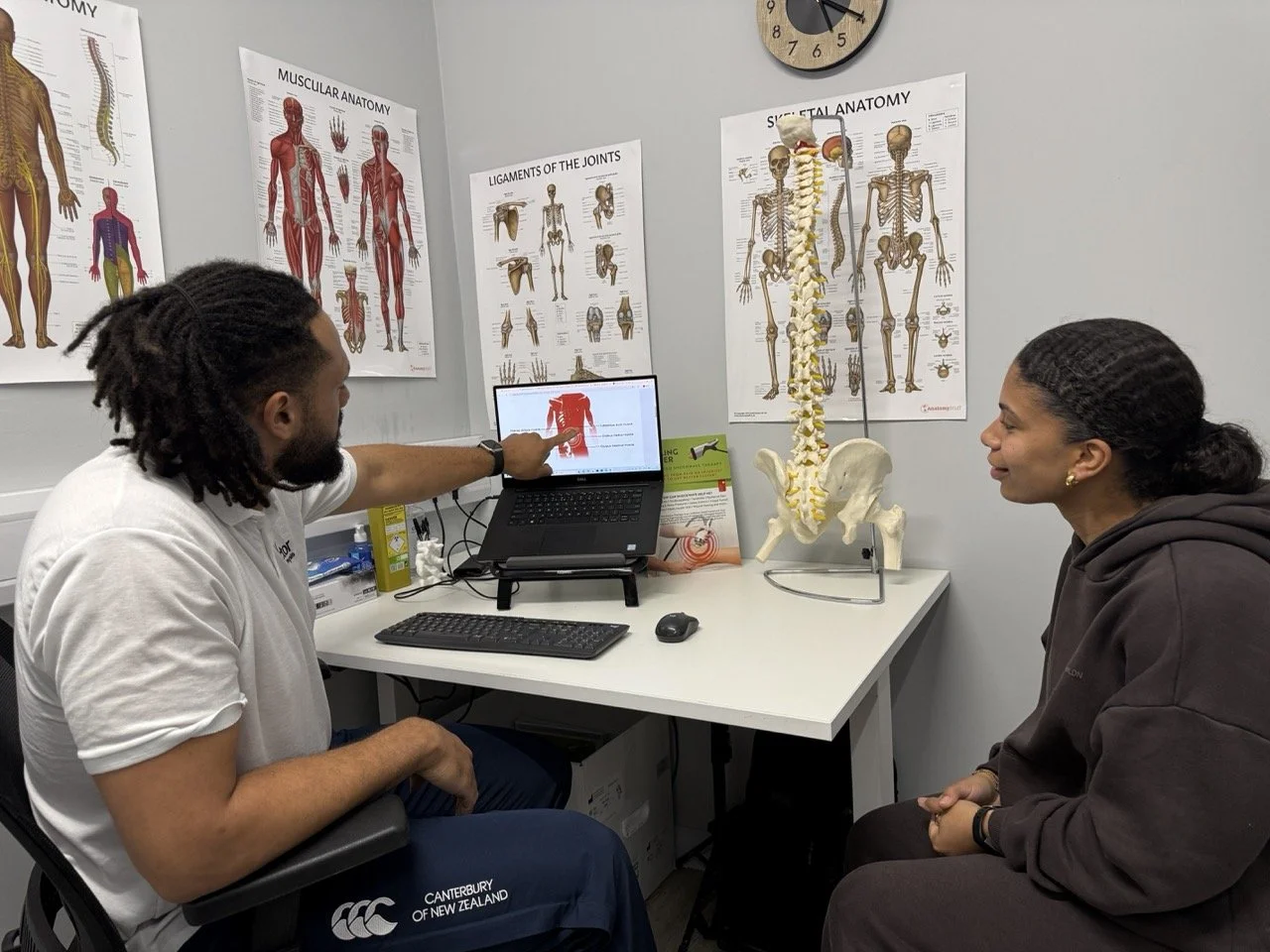
At your first appointment, I will take a thorough history of your problem and ask detailed questions about the behaviour of your symptoms and relevant medical history. I will then observe, examine, and test various movements and structures to diagnose your problem and establish the cause of your symptoms.
-
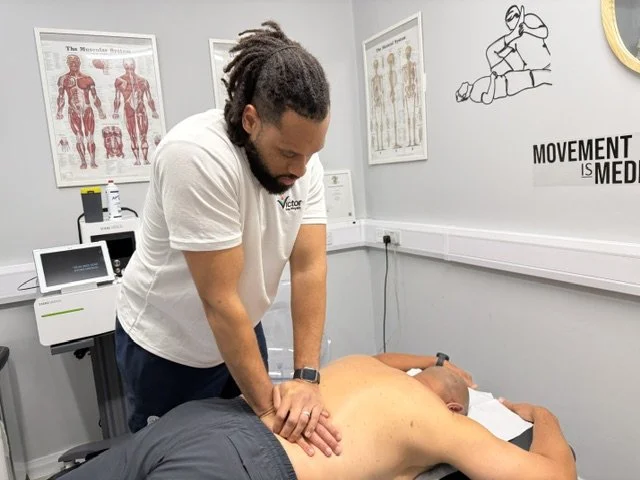
![A physiotherapist is treating a patient lying face down on a treatment table in a physiotherapy clinic.]()
Bespoke treatment
Including advice, education, tailored exercise program, hands-on therapy and Shockwave therapy
My location in Basingstoke
Address
Dummer Down Farm
Drummer Down Lane
Dummer
Basingstoke
RG25 2AR
opening hours
Wed: 18:00 - 21:00
Sat: 08:30 - 13:00
contact information
Phone: 01256533166
Email: admin@victorthephysio.uk
directions
Once arrived onto Dummer Down Farm, drive towards the Tin Shed scenery unit. Once here, you can proceed round towards the back and you will see a Gym called YourBodyGuru. Please note the clinic room is within the YourBodyGuru Gym. There is free parking outside the gym or at the main entrance of the Dummer Down Farm. The farm is only accessible by car as it is in a rural area.
Client testimonials
⭐⭐⭐⭐⭐
All happy with the results....very happy with the treatment and very helpful. I will definitely recommend you to anyone Thank you!
⭐⭐⭐⭐⭐
I have had 3 physiotherapists in the past. Victor is by far the best i have had. Thank you again for the treatment and advice.
⭐⭐⭐⭐⭐
Very professional, listens carefully and recommendations are spot on.
⭐⭐⭐⭐⭐
From the initial call, the service was very good. He was professional and kind. I would recommend the service to others
⭐⭐⭐⭐⭐
I have suffered with plantar fasciitis for a long time. Victor was informative and his treatment very effective.
⭐⭐⭐⭐⭐
Very professional sessions and advice from Victor, felt improving after each session. Victor was patient and made adjustments to the recovery plan. I am so grateful to receive this treatment.
Answering your questions
-
PFP is pain that is felt at the front of and around the kneecap and is commonly caused by an imbalance or tightness of the muscles that support the knee, causing increased pressure through the underside of the kneecap.
Symptoms include
Pain on the front of or around your kneecap
Pain aggravated by kneeling or squatting, or going up and down stairs.
A grinding or scratching sensation or noise coming from the kneecap when bending or straightening the knee.
-
Key Indicators that suggest you may need a Scan include:
Injury & Instability: Sudden pain, popping sensations, or the knee "giving way" or buckling.
Persistent Symptoms: Pain lasting 6-12 weeks that does not improve with rest or physiotherapy.
Mechanical Issues: The knee locks or catches, preventing you from fully straightening it.
Significant Swelling: Swelling that comes and goes or is constant.
Red Flags: A very hot, red, or severely swollen knee, which could indicate infection
-
The knee is supported by four ligaments, which are strong bands of tissue that hold the bones together and stabilise the joint.
Collateral ligaments – the medial collateral ligament (MCL) and lateral collateral ligament (LCL) are found on either side of the knee. They control and limit how much your leg can move from side to side.
Cruciate ligaments - the anterior cruciate ligament (ACL) and posterior cruciate ligament (PCL) are found within the knee. They control and limit how much your leg can move forwards and backwards
-
The meniscus contains two thick, C-shaped pads of cartilage. One medially (inside) and the other laterally (outside). The meniscus acts as shock absorbers between the thigh bone (femur) and shin bone (tibia). They also help to keep the knee stable and distribute body weight evenly through the knee.
Occasionally, the meniscus can become irritated and inflamed leading to a tear in the cartilage. Meniscal tears cause symptoms like pain, stiffness, swelling, clicking and locking, which can make it difficult to walk and complete everyday activities.
Damage to the medial and lateral menisci can occur due to:
Twisting your knee with your foot planted – this often happens when playing sports like football.
Wear and tear – this is also known as degenerative meniscal injury and is most common with increasing age. The meniscus gradually wears down as a result of osteoarthritis and weakens the muscles that support the knee.
Injury – such as a car accident
Previous injury involving the anterior cruciate ligament in the knee – a ligament is a strong band of tissue that holds the bones together and stabilises the joint. The ACL attaches from the front of the shin bone (tibia) upwards and backwards to attach into the back of the thigh bone (femur).
Meniscal tears can be classified as sudden (tears caused by an injury) or gradual (tears that develop gradually over time). Gradual tears usually occur in people over the age of 40.
Meniscal tears are most commonly seen in athletes and medial tears are more common than lateral tears
Common symptoms of a meniscus tear include:
Knee pain
Trouble walking
Poor mobility or range of motion
Swelling
Clicking or locking sensation when bending your knee
Knee instability or feeling like the knee gives way