
Greater Trochanteric Pain Syndrome (GTPS)
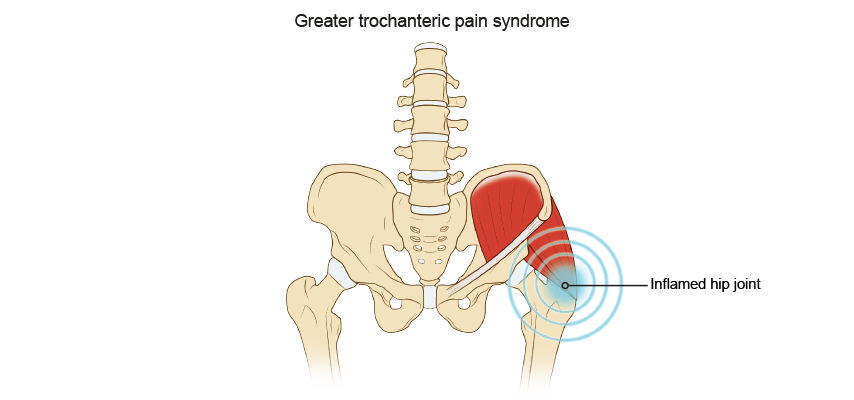
Greater Trochanteric Pain Syndrome (GTPS) has a prevalence of 10-25% of the general UK population and is experienced by one in every four women aged over 50. It’s impact on quality of life is equivalent to severe hip osteoarthritis. The hip joint is complex. It is vital in supporting the weight of the body and helping us to move. There are many important structures around the hip, also known as soft tissues. These include:
Ligaments – connect bones to bones
Tendons – connect muscles to bones
Bursae – fluid-filled sacs that reduce friction and cushion pressure points
Muscles
Greater trochanteric pain syndrome is caused by irritation of one or more of these soft tissues. In most cases, people see significant improvement within 3 to 6 months with consistent treatment although in some cases it can take longer for symptoms to improve.
What are the common signs and symptoms?
Lying on your affected side at night
Walking up stairs
Putting on trousers
Getting into the bath
Prolonged periods of sitting
High impact physical activity
Causes of a GTPS?
Tendinopathy – the breakdown of fibres within the tendons.
Bursitis – when the bursa become inflamed.
Snapping hip syndrome – when the tendon catches as the hip moves, making a popping or clicking sound.
Usually, in GTPS there tends to be a mix of both bursitis and tendinopathy.
What are my treatment options?
Reducing the load on your hip – this involves avoiding activities which put weight on the hip
Strengthening exercises – specific exercises can build up the muscles in your hip and relieve symptoms
Weight loss – if you are overweight or obese
Pain relief medication
Further treatment options such as injections, shockwave therapy or surgery may be necessary if your pain does not go away.
Combined Focused and Radial Shockwave therapy – involves passing short waves into affected tissues to stimulate healing.
Injections or surgery are only considered in long-standing cases that do not improve with rehabilitation.
How do I know if am loading the tendon appropriately?
Pain remains tolerable during exercise. No more than a 5/10 on a discomfort scale
You see an increase in function i.e. able to climb stairs with no pain
Please note, If you experience a significant worsening of symptoms the next day. That’s an indication that you’re loading too much and need to back off a bit.
Do I need Shockwave therapy to help the Tendon to recover?
If you are struggling to see results, a combination of radial and focused shockwave therapy with a structured rehabilitation program can achieve meaningful improvements in pain, function, and quality of life, especially in those grappling with a chronic tendinopathy. Each modality of shockwave therapy interacts with the tissues differently, influencing neovascularisation, collagen synthesis, and nociceptor modulation.
How many Shockwave sessions will I need?
I advice a minimum of three shockwave sessions roughly one week apart. Some clients may require additional sessions, but this will depend on the glutes response and severity of the condition.
What is Victor the Physio’s approach to treating GTPS?
I believe activity management and a loading program is key to recovery. In most cases this will be enough to get you back to living pain free. In chronic cases where this is not sufficient, I think shockwave therapy should be considered to stimulate healing of the tendon.
