
Patella Tendinopathy
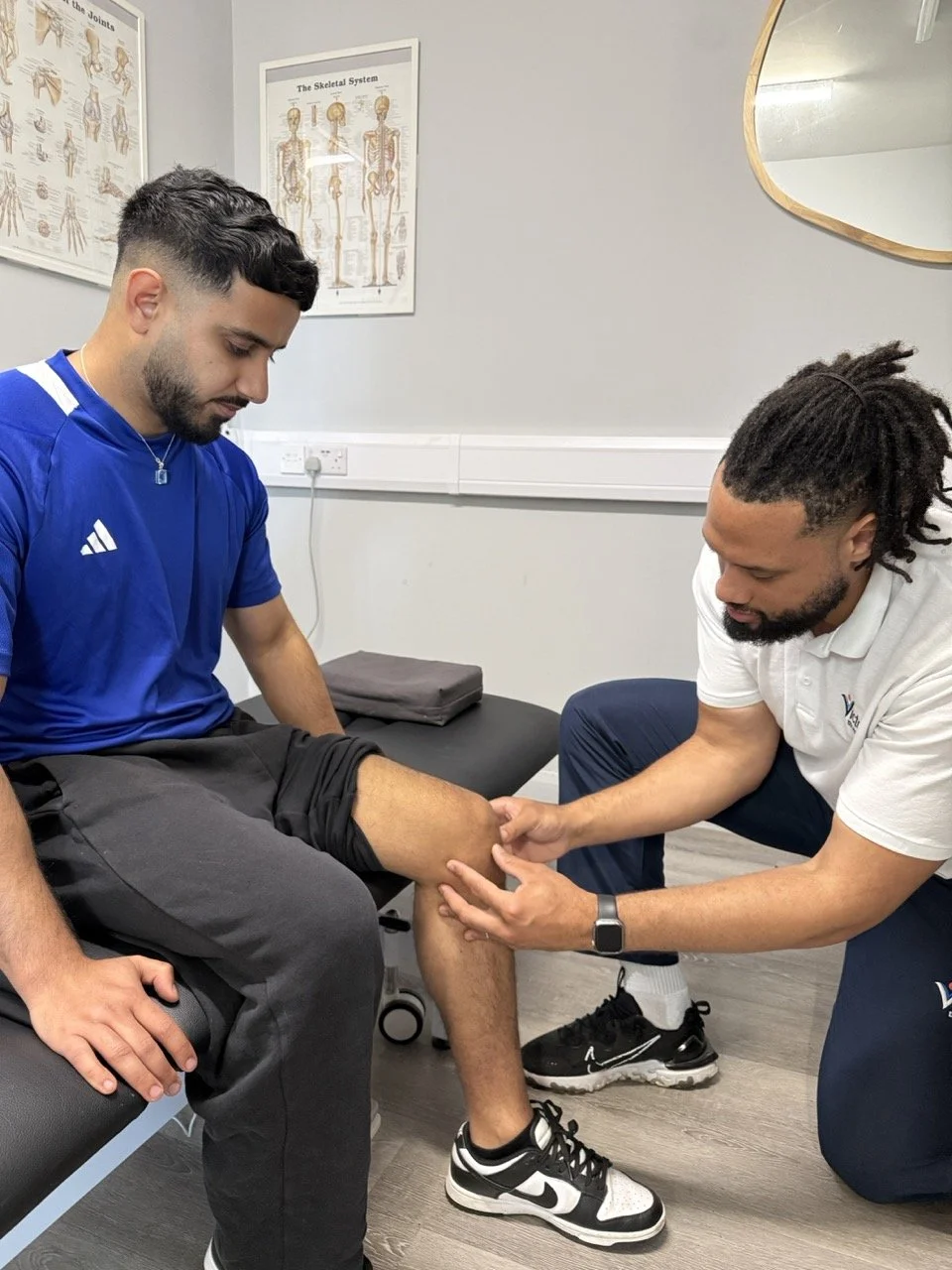
Patella tendinopathy is a painful condition characterised by pain at the front of the knee. It is also known as jumper’s knee because it is common in athletes who practice jumping sports, such as basketball, volleyball, high jump and skiing. The condition primarily affects athletic men between the ages of 15 – 30, however, it is also seen in any gender group and within older populations. This injury is problematic as the knee is essential for pretty much any form of movement such as walking, running and jumping.
What are the common signs and symptoms?
Pain or aching located just below the kneecap
Knee Stiffness
Knee Swelling
Difficulty extending the knee
Trouble putting any weight on the knee
A constant pulsing, throbbing sensation in and around the kneecap
Why did I get Patella Tendinopathy?
Patella tendinopathy happens when the patella tendon, a strong band of tissue connecting your kneecap (patella) to your shinbone (tibia), weakens and tears. This is caused by repetitive stress on the knee due to things like:
Overuse – strenuous exercise sessions with insufficient periods of rest in between
Underuse (deconditioning) – from sedentary behaviours such as desk-working
Rapid increase in amount of physical exercise
Frequent jumping – sports like basketball that require regular jumping and landing movements
Running on hard surfaces
Unsupportive footwear
Obesity
Sometimes it is not always clear why patella tendinopathy occurs.
What are my treatment options?
Physiotherapy - involves activity management, soft tissue massage and a loading program.
Combined Focused and Radial Shockwave therapy – involves passing short waves into affected tissues to stimulate healing
Knee injections – for more serious cases
Surgery – for more serious cases
Avoiding strenuous activities, particularly movements involving excessive jumping, is important during recovery
How long to recover?
Initial recovery is usually within 2 to 3 months and full recovery is usually within 3 to 6 months.
About 80% of people will fully recover within 12 months.
How do I know if am loading the tendon appropriately?
Pain remains tolerable during exercise. No more than a 5/10 on a discomfort scale
You see an increase in function i.e. able to climb stairs easier or run for longer no pain
Please note, If you experience a significant worsening of symptoms the next day. That’s an indication that you’re loading too much and need to back off a bit.
Do I need Shockwave therapy to help the Tendon to recover?
If you are struggling to see results, a combination of radial and focused shockwave therapy with a structured rehabilitation program can achieve meaningful improvements in pain, function, and quality of life, especially in those grappling with a chronic tendinopathy. Each modality of shockwave therapy interacts with the tissues differently, influencing neovascularisation, collagen synthesis, and nociceptor modulation.
What is Victor the Physio’s approach to treating Patella Tendinopathy?
I believe activity management and a loading program is key to recovery. In most cases this will be enough to get you back to your sport. In chronic cases where this is not sufficient, I think shockwave therapy should be considered to stimulate healing.
