
Hamstring Tendinopathy
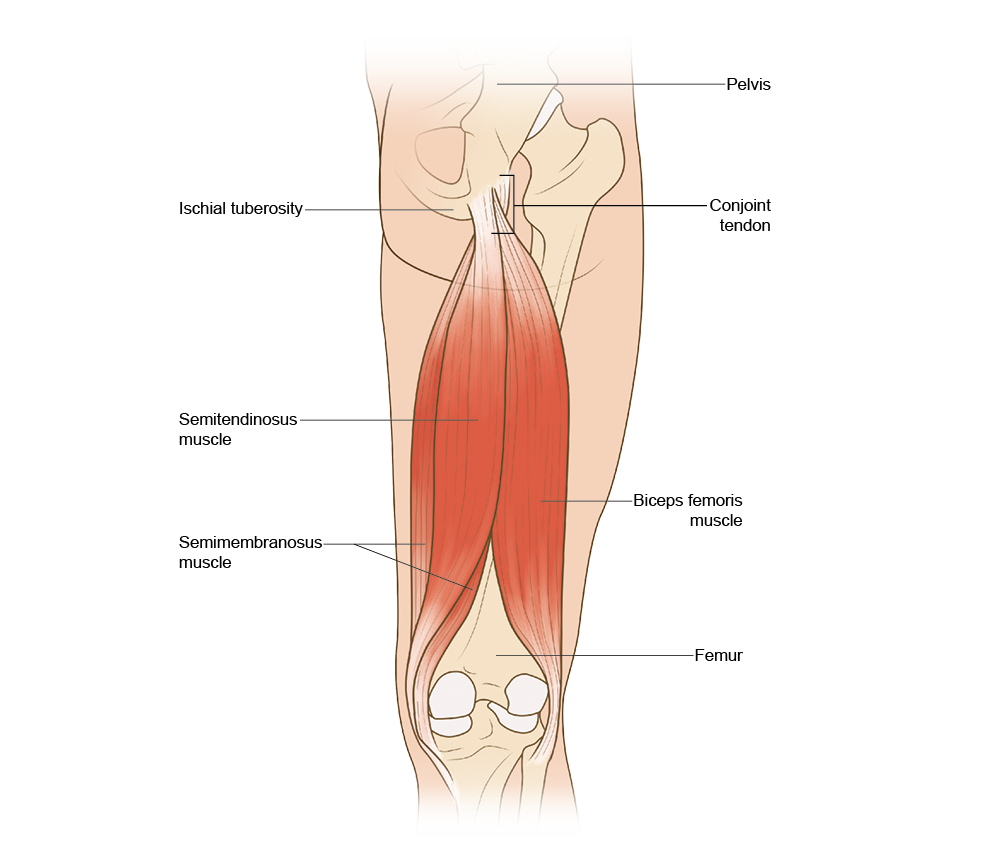
Proximal Hamstring Tendinopathy (PHT) is a condition impacts the hamstring tendon (proximal tendon) connecting the hamstring muscle to the ischial tuberosity (pelvic bone). It commonly causes deep gluteal (buttock) pain, especially during activities such as running, sitting for long periods and/or bending forward. It accounts for approximately 3% of all tendinopathies in athletes. Proximal hamstring tendinopathy, like any form of tendon pain, is caused by the relationship between the demand placed on the tendon (load) and the rate at which the tendon can adapt or regenerate (repair).
What are the common signs and symptoms?
Tightness in the hamstring and difficulty bending
Deep pain or discomfort in the buttock and proximal (hip end) hamstring region
Reduced strength in the hamstring
Pain worse when sitting for long periods
Pain aggravated by painful sporting activities e.g. running (especially uphill), cycling, kicking
Pain triggered by bending forward or stretching the hamstring
Causes and Risk factors of a Hamstring Tendinopathy?
Proximal hamstring tendinopathy develops when repeated strain (activity) overloads the tendon over time or when there is a sudden increase in training volumes or intensity. This is different from a hamstring muscle strain, which usually is caused by a sudden movement.
Common contributing factors include:
Sustained overuse – especially long-distance activities such as running, high volume sprinting, cycling or hill running
Sudden increase in training intensity and/or distance
Poor hip strength
Reduced hamstring flexibility
Previous hamstring injury
Inadequate recovery between exercise sessions
Other factors, such as prolonged sitting on hard surfaces can increase symptoms experienced with PHT.
Research also tells us that some people are genetically more likely to experience tendinopathies. Therefore, if you have had a tendinopathy in a different tendon, you are more likely to experience PHT.
What are my treatment options?
Physiotherapy - Load management and progressive loading exercises over a 3–12 month period.
Combined Focused and Radial Shockwave therapy – involves passing short waves into affected tissues to stimulate healing.
Injections or surgery are rarely required and are only considered in long-standing cases that do not improve with rehabilitation
How do I know if am loading the tendon appropriately?
Pain remains tolerable during exercise. No more than a 5/10 on a discomfort scale
You see an increase in function i.e. able to run for longer with no pain
Please note, If you experience a significant worsening of symptoms the next day. That’s an indication that you’re loading too much and need to back off a bit.
Do I need Shockwave therapy to help the Tendon to recover?
If you are struggling to see results, a combination of radial and focused shockwave therapy with a structured rehabilitation program can achieve meaningful improvements in pain, function, and quality of life, especially in those grappling with a chronic tendinopathy. Each modality of shockwave therapy interacts with the tissues differently, influencing neovascularisation, collagen synthesis, and nociceptor modulation.
How many Shockwave sessions will I need?
I advice a minimum of three shockwave sessions roughly one week apart. Some clients may require additional sessions, but this will depend on the hamstrings response and severity of the tendinopathy.
What is Victor the Physio’s approach to treating a Hamstring Tendinopathy?
I believe activity management and a loading program is key to recovery. In most cases this will be enough to get you back to your sport. In chronic cases where this is not sufficient, I think shockwave therapy should be considered to stimulate healing.
