
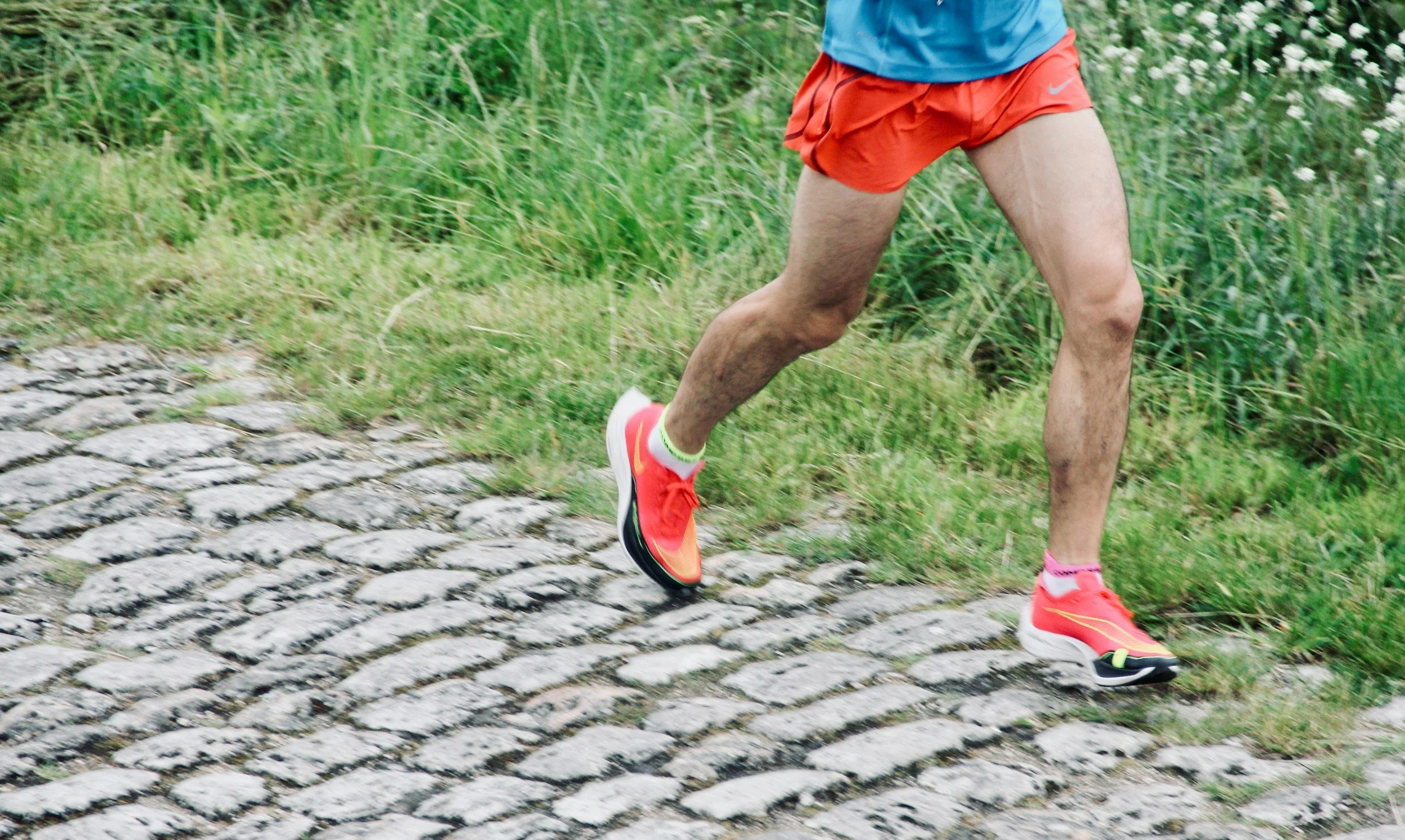
Running is one of the simplest and most accessible ways to improve cardiovascular fitness, strength and overall health. However, knee pain is a common complaint among runners, from beginners increasing their mileage to experienced runners preparing for a marathon.
If you have developed knee pain when running, you may be wondering whether you should stop running completely, whether you have damaged your knee, or whether you simply need to change your training.
The good news is that running itself is not inherently bad for your knees. Research has not established that recreational running causes knee osteoarthritis, and several studies have found no increased prevalence of knee osteoarthritis among recreational runners compared with non-runners.
However, running places repeated loads through the muscles, tendons, cartilage and other structures around the knee. Problems can occur when the demands of training increase faster than your body can adapt.
In this guide, we'll look at the most common causes of knee pain when running, the areas of the knee that can become irritated, how to prevent running-related knee injuries and what you can do if you're already experiencing pain.
Knee Pain After Running – Is It Normal?
It is relatively common to experience some muscle fatigue or mild soreness after running, particularly if you have recently increased your distance, speed or hill running.
However, persistent or significant knee pain should not simply be ignored.
There is an important difference between normal post-exercise muscle soreness and pain that may indicate an underlying problem.
Knee pain that is:
Sharp or severe
Localised to a particular area of the knee
Getting progressively worse
Present during everyday activities
Associated with swelling
Causing the knee to lock or give way
Preventing you from running normally
may warrant further assessment.
If pain repeatedly appears during or after your runs, it is worth looking at why the knee is becoming painful rather than simply trying to push through it.
I recommend avoiding running when you are experiencing knee pain and seeking assessment if symptoms do not settle.
Is Running Bad for Your Knees?
One of the most common concerns among runners is that running will eventually "wear out" their knees. Current evidence does not support this as a general rule. A systematic review and meta-analysis examining the relationship between running and knee osteoarthritis found conflicting evidence overall and did not establish that running causes knee osteoarthritis. More recent research has similarly found no significant difference in knee osteoarthritis prevalence between runners and non-runners across different weekly running volumes. Another systematic review found that, over short-term follow-up, running was not associated with worsening patient-reported outcomes or radiological signs of knee osteoarthritis.
This does not mean that running can never contribute to knee pain.
Running is a repetitive activity and places considerable load through the lower limb. Problems can arise when the amount or intensity of running exceeds the body's current capacity. For example, suddenly going from running 5 km once a week to running 30 km per week is a substantial increase in training demand.
The important question is therefore often not:
"Is running bad for my knees?"
but:
"Is my current running load appropriate for my body's current capacity?"
How Does Running Cause Knee Pain?
Running involves thousands of repetitive movements during each session. Every stride places load through the foot, ankle, knee, hip and pelvis. Your body is remarkably good at adapting to this load, provided that the training stimulus is appropriately progressed and adequate recovery is provided. Knee pain can develop when the tissues around the knee are repeatedly exposed to more load than they are currently able to tolerate.
Common contributing factors include:
Sudden increases in training - Increasing your mileage, speed, hill running or number of weekly sessions too quickly can increase the demands placed on the knee.
Changes in training - Introducing sprint sessions, intervals, hills, trails or longer runs can significantly alter the forces experienced by the knee.
Insufficient recovery - Your body needs time between training sessions to recover and adapt. Running hard on consecutive days may be inappropriate for some runners.
Muscle capacity - The quadriceps, hamstrings, calf muscles and hip musculature all contribute to controlling movement and absorbing load during running.
Previous injury - A previous knee, hip, ankle or foot injury may alter how you move and distribute load during running.
Running technique - Running mechanics can influence how forces are distributed throughout the lower limb. However, there is no single "perfect" running technique that applies to every runner.
Training environment - Changes such as running significantly more hills, trails or hard surfaces can alter the demands placed on your body.
Recovery and lifestyle - Sleep, nutrition, stress and overall training volume can all influence your ability to recover from exercise. In many cases, knee pain develops from a combination of factors rather than one single cause.
Which Areas of the Knee Can Become Painful When Running?
The knee is a complex joint containing several structures that can contribute to pain. These include:
Patellofemoral joint - The patellofemoral joint is where the kneecap (patella) interacts with the thigh bone (femur). Pain from this area is commonly felt around or behind the kneecap.
Patellar tendon - The patellar tendon connects the kneecap to the shin bone. It can become painful when repeatedly exposed to high levels of loading, particularly with running, jumping and other high-demand activities.
Menisci - The medial and lateral menisci are specialised cartilage structures located between the thigh bone and shin bone. They help with load distribution and contribute to knee stability.
Iliotibial band - The iliotibial band (ITB) is a strong band of connective tissue running along the outside of the thigh. Irritation around the outer aspect of the knee is commonly associated with iliotibial band syndrome.
Ligaments - The ACL, PCL, MCL and LCL contribute to knee stability. Ligament injuries are less commonly caused by straightforward distance running and are more often associated with a sudden twist, fall or change of direction.
The Most Common Causes of Knee Pain in Runners
Runner's Knee – Patellofemoral pain. It is generally experienced around or behind the kneecap
Iliotibial Band Syndrome - Iliotibial band syndrome typically causes pain on the outside of the knee.
Patellar Tendinopathy - Patellar tendinopathy affects the tendon located immediately below the kneecap.
Meniscal Injuries - The menisci can become injured following a twisting movement or through gradual degenerative changes.
Knee Bursitis - Bursae are small fluid-filled structures that help reduce friction between tissues.
Ligament Injuries - Ligament injuries are less common in straightforward distance running but can occur following a fall, sudden twist or unexpected change in direction.
How Can You Prevent Knee Pain When Running?
There is no way to guarantee that you will never experience a running injury. However, several strategies can help reduce your risk.
Increase training gradually.
Strength train regularly. Strength training can help improve your ability to tolerate running loads.
Allow adequate recovery. Your body needs time to recover between demanding sessions. Consider varying the intensity of your training and incorporating rest or lower-impact sessions where appropriate.
Don't ignore recurring pain. If your knee repeatedly becomes painful after running, don't simply keep increasing your mileage and hope that it disappears.
Consider your footwear. Running shoes should be comfortable and appropriate for your running needs.
Warm up before harder sessions. A gradual warm-up can prepare you for more demanding running.
Don't Let Knee Pain Stop You From Running
At my clinic, I assess running-related knee pain from a whole-body perspective, considering your training history, strength, movement, previous injuries and running goals.
Treatment may include hands-on treatment where appropriate, shockwave therapy, progressive strengthening, load management, running advice and a structured return-to-running programme.
If knee pain is stopping you from running, book a physiotherapy assessment to find out what's causing it and what you can do to get back to running confidently.
