
Carpal Tunnel Syndrome: How MSK Physiotherapy Can Help and the Role of Focused Shockwave Therapy
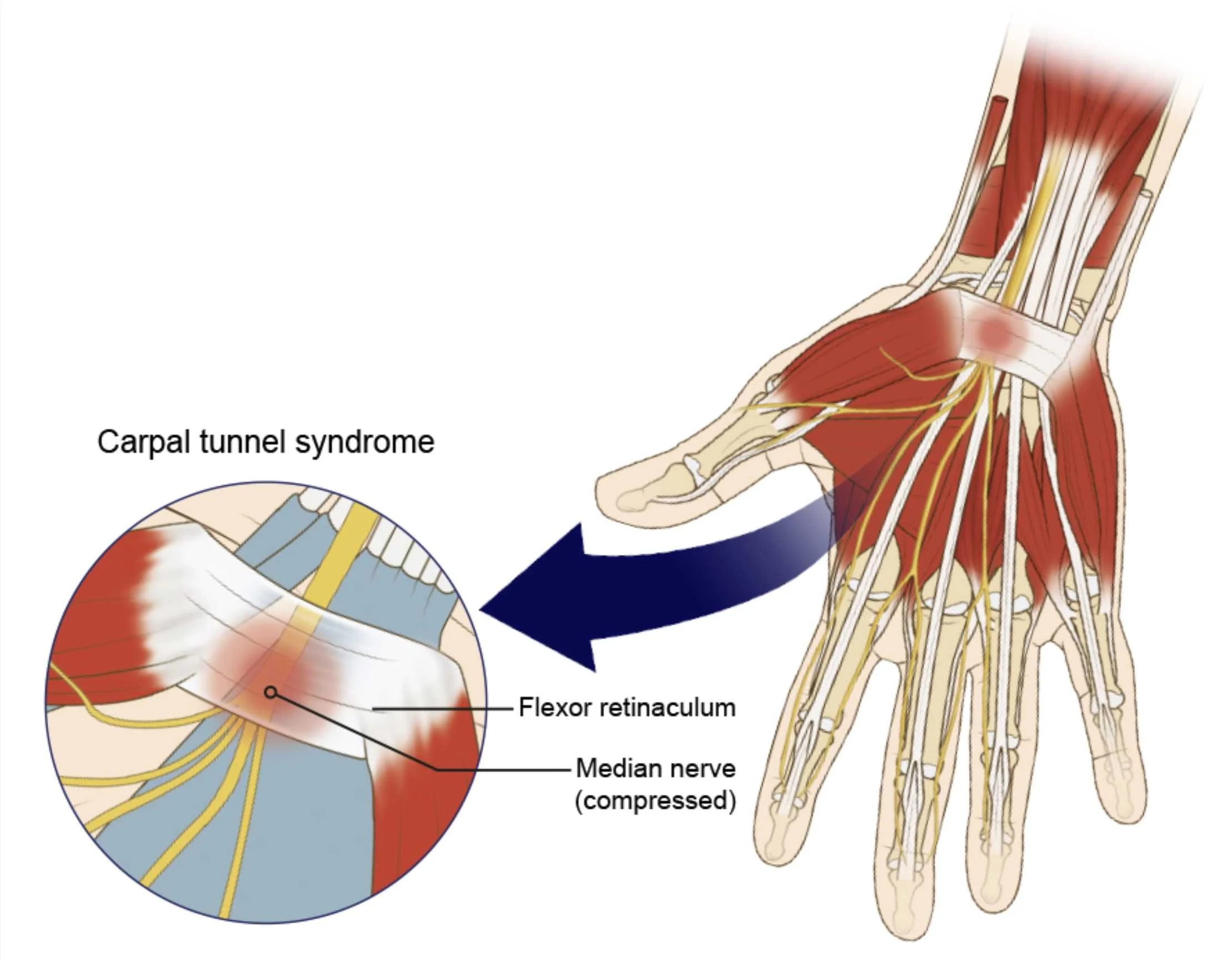
Carpal Tunnel Syndrome (CTS) is a common condition affecting the hand and wrist. It occurs when the median nerve becomes compressed as it passes through the carpal tunnel at the wrist, causing symptoms such as pain, tingling, numbness and, in some cases, weakness in the hand.
For many people, symptoms can be managed effectively with conservative treatment. MSK physiotherapy can play an important role by identifying contributing factors, modifying aggravating activities and using a combination of exercise, manual therapy, nerve mobilisation and other appropriate treatments.
One treatment that may be considered as part of a wider physiotherapy programme is extracorporeal shockwave therapy (ESWT). Both radial and focused shockwave have been investigated for carpal tunnel syndrome, although the evidence for focused shockwave specifically remains less established.
What is Carpal Tunnel Syndrome?
The carpal tunnel is a narrow passageway on the palm side of the wrist. It contains several tendons and the median nerve, which provides sensation to parts of the hand and contributes to movement of some of the thumb muscles.
When pressure on the median nerve increases, symptoms of carpal tunnel syndrome can develop.
Common symptoms include:
Tingling or pins and needles in the thumb, index and middle fingers
Numbness in the hand or fingers
Aching or pain around the wrist and hand
Symptoms that are worse at night
Waking with the need to shake or move the hand
Difficulty with gripping or fine hand movements
Weakness of the thumb in more established cases
Symptoms that can sometimes travel into the forearm
Symptoms can vary considerably between individuals. Some people experience intermittent tingling, while others develop persistent numbness or weakness.
What Causes Carpal Tunnel Syndrome?
There is not always one identifiable cause of CTS.
Anything that increases pressure within the carpal tunnel or affects the median nerve can potentially contribute. Risk factors and associated conditions include:
Repetitive hand or wrist activities
Prolonged or sustained wrist positions
Previous wrist injury
Pregnancy
Diabetes
Inflammatory conditions
Certain hormonal or metabolic conditions
Changes within the tissues surrounding the carpal tunnel
In some cases, symptoms can develop without an obvious trigger.
This is why a thorough assessment is important rather than assuming that wrist pain or hand tingling is automatically caused by carpal tunnel syndrome.
How Can MSK Physiotherapy Help Carpal Tunnel Syndrome?
Physiotherapy management is generally focused on reducing aggravating factors, improving function and addressing impairments identified during the assessment.
Your treatment programme may include several different approaches.
1. Activity Modification
Identifying activities that increase your symptoms can be an important first step.
This could involve modifying:
Computer and keyboard use
Repetitive gripping
Manual work
Tool use
Sustained wrist positions
Sleeping positions
Other activities that repeatedly aggravate your symptoms
The aim isn't necessarily to stop using your hand. Instead, your physiotherapist can help you find ways of managing your workload while allowing the irritated nerve to settle.
2. Wrist Splinting
A wrist splint may be recommended, particularly at night.
The purpose is generally to help maintain the wrist in a more neutral position and reduce prolonged wrist positioning that may aggravate symptoms.
Splinting can form part of a broader conservative management programme, particularly in mild to moderate cases.
3. Exercise Therapy
Exercise may form part of your rehabilitation programme depending on your assessment findings.
This can include appropriate:
Wrist and hand exercises
Tendon-gliding exercises
Stretching
Strengthening
Median nerve mobilisation
Exercises for the wider upper limb where appropriate
The specific exercises should be individualised rather than simply following a generic programme.
The 2026 clinical practice guideline from the American Physical Therapy Association's Orthopaedic and Hand & Upper Extremity Academies supports combined orthotic/stretching programmes in appropriate people with mild to moderate CTS who do not have thenar atrophy and have normal two-point discrimination.
4. Nerve Mobilisation
The median nerve can be assessed to determine whether nerve mobility or sensitivity may be contributing to your symptoms.
Where appropriate, your physiotherapist may introduce nerve mobilisation exercises, sometimes referred to as nerve gliding.
These exercises are designed to encourage normal movement of the nerve and surrounding tissues rather than aggressively stretching the nerve.
What is Focused Shockwave Therapy and How Could Focused Shockwave Therapy Be Used for Carpal Tunnel Syndrome?
Focused shockwave therapy is a form of extracorporeal shockwave therapy that uses acoustic energy to deliver treatment to a specific area and depth within the body. Unlike radial pressure wave therapy, which disperses energy from the applicator into the tissues, focused shockwave converges energy towards a defined target. This allows the clinician to select treatment depth and target tissues more precisely.
Shockwave therapy has been investigated as a non-surgical treatment for carpal tunnel syndrome, particularly in people with mild to moderate symptoms.
Following an appropriate assessment, a clinician may consider whether shockwave therapy is suitable based on factors such as:
The severity and duration of symptoms
The clinical presentation
Functional limitations
Previous treatment
Irritability of the condition
Other medical conditions
Whether there are signs suggesting more significant nerve compression
The treatment would typically be combined with appropriate rehabilitation and advice rather than replacing these elements.
The proposed rationale for ESWT in CTS is that acoustic energy may influence pain, tissue response and other biological processes around the affected area. However, the exact mechanisms and optimal treatment parameters for CTS are not yet fully established.
Frequently Asked Questions
Is focused shockwave therapy effective for carpal tunnel syndrome?
Research suggests that ESWT may provide improvements in symptoms and function for some people with mild to moderate CTS.
Can physiotherapy cure carpal tunnel syndrome?
Physiotherapy can help manage symptoms and improve function, particularly in mild to moderate cases. However, treatment outcomes depend on the severity, duration and underlying cause of the nerve compression.
Do I need surgery for carpal tunnel syndrome?
Not necessarily. Many people with mild to moderate symptoms are initially managed conservatively. However, persistent neurological symptoms, significant weakness or muscle wasting may require specialist assessment.
Should I have a scan?
Not everyone with suspected CTS requires imaging. Diagnosis can often be made clinically, while nerve conduction studies or other investigations may be considered when the diagnosis is uncertain or symptoms warrant further investigation.
Conclusion
Carpal Tunnel Syndrome is a condition involving compression of the median nerve at the wrist and can cause pain, tingling, numbness and weakness in the hand.
MSK physiotherapy can provide a structured approach to conservative management through assessment, activity modification, splinting, exercise, nerve mobilisation and appropriate focused shockwave therapy.
If you are experiencing symptoms of carpal tunnel syndrome, a detailed clinical assessment can help determine the most appropriate treatment approach for you.
