
Sciatica
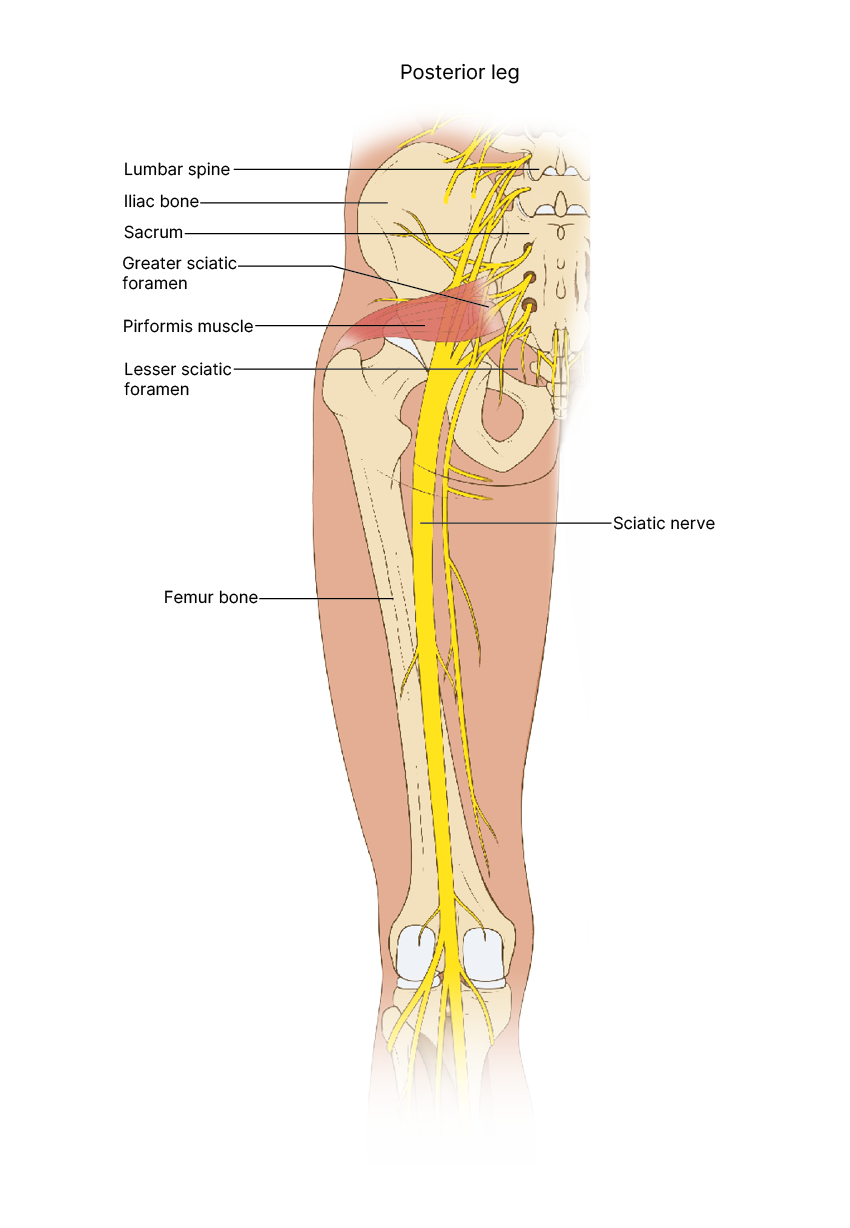
Roughly 1% to 5% of the UK population experiences a new episode of sciatica every year. The sciatic nerve runs from the lower back down to the legs, and when it becomes compressed or irritated, it can cause pain, tingling, or numbness. It is a prevalent condition, and most common in individuals aged 40 to 60.
What are the common signs and symptoms?
Sciatica is a pain that runs from the lower back and buttocks down the leg. It may feel:
Painful – stabbing, burning or shooting.
Tingly – like pins and needles.
Numbness
Weakness
Please note! If you experience symptoms of sciatica down both legs, any changes to your urinary or bowel control, sexual dysfunction such as difficulty achieving an erection, or numbness around your buttocks and genital area (this may feel like a change in sensation when wiping), go to the hospital immediately. This could be a sign of something more serious.
Causes of Sciatica?
Sciatica is a symptom of another medical condition. The most common cause include
Herniated or Slipped disc in the spine - This puts pressure on the nerve.
Spinal stenosis - changes to the bones and ligaments in the spine, which narrow the canal that the nerves pass through. Usually affects the older population
Piriformis syndrome - when the piriformis muscle in the buttocks presses on the sciatic nerve. This syndrome is usually caused by Injury to the hip or buttocks; Sitting for prolonged periods or Overexercising.
What are my treatment options?
Most cases resolve within a 6-8 week period. During this time, it is important to continue your normal activities. The following treatment options are useful to speed up your recovery process:
Loading exercises – this includes exercising within a comfortable range that does not aggravate your pain
Heat therapy
Gentle and regular movement such as walking
Activity modification - minimising aggravating activities such as prolonged sitting
Pain relief medication
What is Victor the Physio’s approach to treating Sciatica?
I believe education is key. This allows the individual to understand what the likely cause of their sciatica pain is and how to effectively manage the condition. In addition, it reduces the risk of the condition flaring up again. Activity management advice and exercises are always provided. In clinic sessions, we could also do assisted stretches and acupuncture treatment if indicated. In my experience, A positive mindset will also help with the recovery process.
