
Meniscus tear
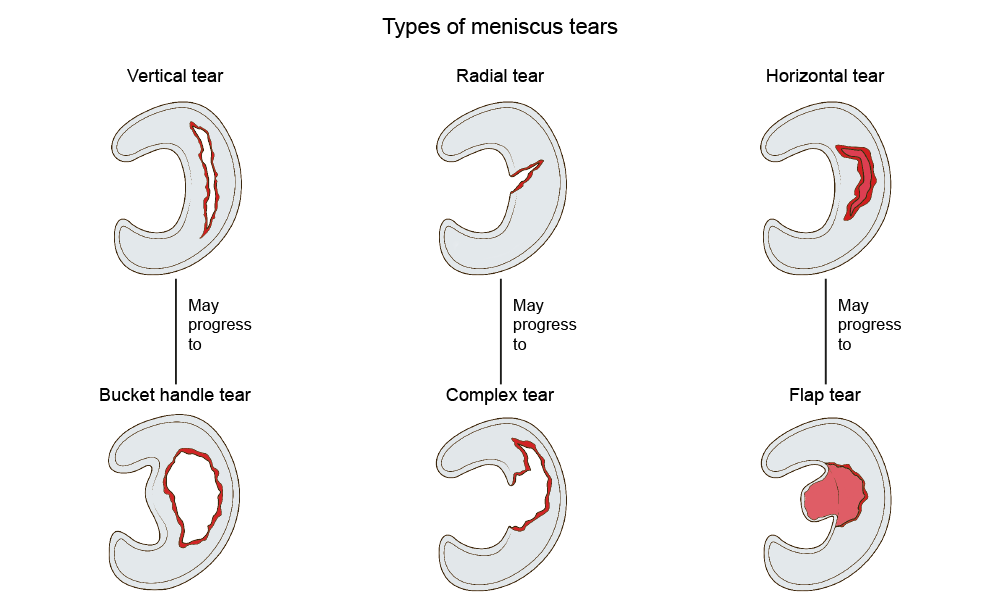
The knee joint is the largest joint in the body. It contains two thick, C-shaped pads of cartilage called the medial (inside) and lateral (outside) menisci, which act as shock absorbers between the thigh bone (femur) and shin bone (tibia). They also help to keep the knee stable and distribute body weight evenly through the knee.
In the UK, there is annual incidence of about 60-80 symptomatic cases per 100,000 people. The meniscus can become irritated and inflamed leading to a tear in the cartilage. Meniscal tears cause symptoms like pain, stiffness, swelling, clicking and locking, which can make it difficult to walk and complete everyday activities.
Causes and Risk factors?
Damage to the medial and lateral menisci can occur due to:
Twisting motion of the knee whilst your foot is planted – this often happens when playing sports like football.
Wear and tear – otherwise known as degenerative meniscal injury. This is most common with increasing age. The meniscus gradually wears down as a result of osteoarthritis and weakens the muscles that support the knee.
Traumatic Injury – such as a car accident
Previous injury involving the anterior cruciate ligament in the knee
Meniscal tears can be classified as sudden (tears caused by an injury) or gradual (tears that develop gradually over time). Gradual tears usually occur in people over the age of 40.
Meniscal tears are most commonly seen in athletes and medial tears are more common than lateral tears.
Common signs and symptoms?
Knee pain
Trouble walking
Poor mobility or range of motion
Swelling
Clicking or locking sensation when bending your knee
Knee instability or feeling like the knee gives way
A pop sensation at the time of injury may indicate ligament damage. It commonly occurs at the same time as meniscal injuries due to the location and cause of injury.
Gradual tears slowly worsen over many weeks or months.
Treatment options?
Treatment for a meniscal tear depends on the location and type of tear. Gradual tears and small tears under 1cm are usually treated conservatively. This includes:
Gentle exercise and stretches – to increase your flexibility
Physiotherapy – to strengthen the muscles around your knee and increase your balance and agility
Pain relief medication – such as anti-inflammatories to reduce inflammation and swelling
Some sudden meniscal tear may require surgical intervention. There are two types of surgery are available: a partial meniscectomy (where the damaged portion of the meniscus is trimmed away) or a meniscal repair (through keyhole surgery called an arthroscopy). In rare cases, a total meniscectomy (where the entire meniscus is removed) is recommended if the other options are not suitable.
Usually, a partial meniscectomy is sufficient for lateral tears because there is a good blood supply, and they tend to heal well. However, medial tears often require a full meniscal repair because they lack a good blood supply and do not always heal well on their own.
After surgery, you will likely require crutches for at least three weeks. Full recovery after surgery with rehabilitation can take 3 – 4 months and athletes can usually return to sport within 6 – 8 months.
What is Victor the Physio’s approach to rehab?
My approach to Meniscal tear rehab is simple. Early mobilisations, effective pain management, and progressive strengthening whilst abiding knee precautions. I believe my clients should be guided during this time as rehabilitating alone is challenging and motivation can easily be lost. My goal is to ensure you regain full function and return to activities stronger and with more confidence.
