
Rotator Cuff Related Shoulder Pain
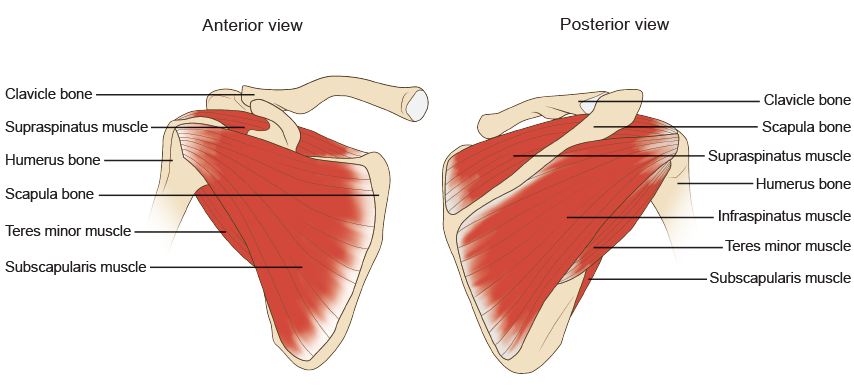
Rotator cuff-related shoulder pain (RCRSP) is the most common cause of shoulder complaints, accounting for 70% to 85% of all shoulder pain diagnosis. It can affect adults of any age though it often affects people aged between 35 – 75. RCRSP is a term that encompasses a diverse range of shoulder conditions. These conditions include subacromial pain (impingement) syndrome, rotator cuff tendinopathy, subacromial bursitis, and symptomatic partial and full thickness rotator cuff tears. RCRSP refers to the muscles, tendons, and surrounding structures such as bursa and nerve related to the rotator cuff of the shoulder.
The rotator cuff is a group of 4 muscles which act together around the shoulder to both support and assist with movements of the upper arm. The muscles are named:
Supraspinatus
Infraspinatus
Subscapularis
Teres Minor
What are the common signs and symptoms?
Shoulder and upper arm pain – this may also extend further down the arm
Pain with activities such as lifting and rotating the arm
Pain while lying on the shoulder
Pain can increase at night affecting sleep
Arm weakness
Impact on normal functional activities
Causes?
Age related changes in shoulder structures
Overload or repetitive movements
Trauma
Other lifestyle factors such as smoking and being overweight may increase the chances of developing rotator cuff related shoulder pain.
What are my treatment options?
Modification of activities that are causing the shoulder to become aggravated
Gentle, low intensity exercises and/or isometric exercises
Pain relief. This allows for more comfortable movement and reduced pain at night.
Ice or Heat may be beneficial
Strengthening exercises
Combined Focused and Radial Shockwave therapy – involves passing short waves into affected tissues to stimulate healing
Corticosteroid injections – for more serious cases
How many sessions of Shockwave therapy do I need?
Research suggests three to six sessions spaced one week apart. Shockwave treatment can be uncomfortable. For the most effective treatment, the highest possible dose of shockwave tolerated by the patient should be applied.
Can I keep taking painkillers?
Focused shockwave is a pro-inflammatory treatment. Inflammation is an important part of the healing process. It sets the scene for healing to occur. Taking non-steroidal anti-inflammatories (NSAIDS) for the following 48 hours is not recommended as it can disrupt this process and reduce the effectiveness of the treatment. I advice paracetamol is taken for pain management if needed after focused shockwave treatment.
What is Victor the Physio’s approach to treating RCRSP?
My approach to treatment is a loading program to stimulate healing, restore function and build resilience in the affected structures. For more chronic or limiting cases, Shockwave therapy can be a treatment option. Focused shockwave therapy directs acoustic energy precisely to the exact depth of the rotator cuff tendon.
